Australian animals use tree hollows for various purposes – sometimes for shelter, sometimes for nesting and sometimes for safety from predators. The hollows provide insulation to help protect against cold, heat and rain, and can be found in live and dead trees.
More than 340 species of Australian animals – 15 per cent of birds and about 30 per cent of land mammals – live in hollow homes. Some birds include owls, kookaburras, lorikeets, cockatoos and wood ducks. Some mammals include microbats, gliders, possums and quolls.
The most important thing is to keep as many of our large, old trees as possible to provide these natural habitats for the many species that have relied on them for eons.
But because humans clear land, collect firewood and do other ‘human things’, tree hollows are in short supply.
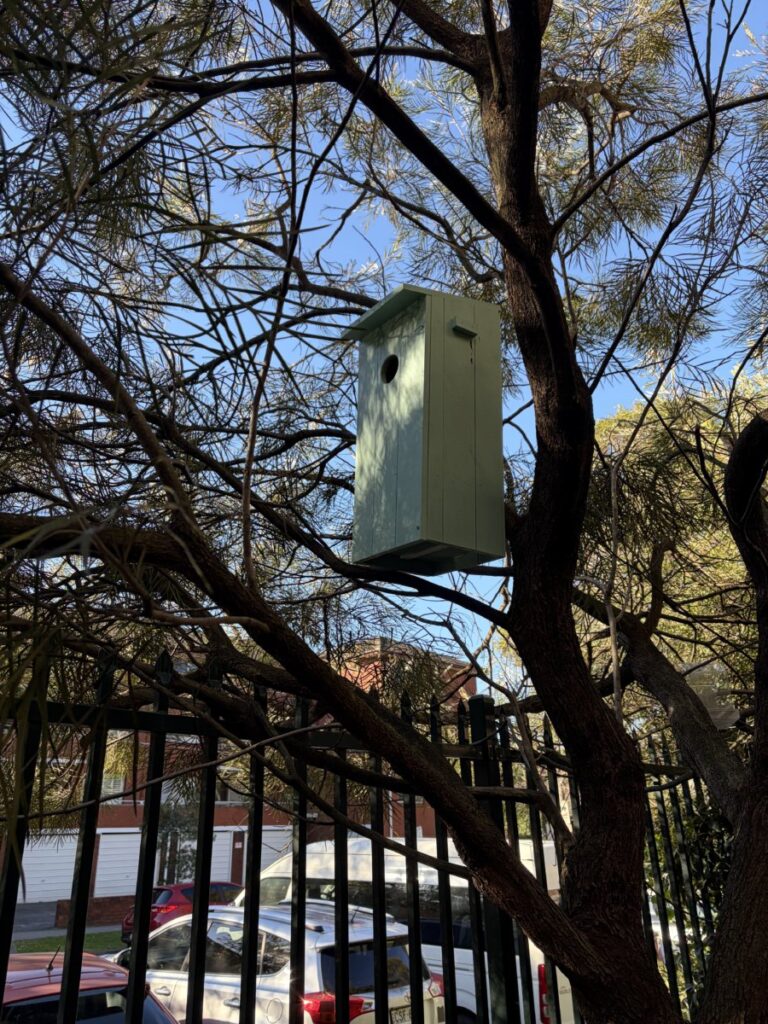
Artificial hollows or wildlife boxes can help animals that look for natural tree cavities where older trees are in short supply. If there is enough food but no natural hollows, wildlife boxes can support various species. They are not a true replacement for natural hollows but they are very useful where hollows are scarce.
What and Where
- Do not use bedding made from straw, sugarcane mulch or sawdust.
- Contact your local council or Landcare group for advice
- Find information about the best size and shape for the species you would like to help. There are plans available in books and online.
- Untreated hardwood is a good material for nesting boxes. Thick-walled boxes offer good insulation.
- Do not varnish boxes or paint them with oil-based paints.
- Paint with at least two coats of a good quality, water-based exterior paint.
If you're looking to purchase a Nesting Box there are lots of considerations but a good place to start for more information and to purchase boxes is FauNature.