Programs Overview
PlantingSeeds’ B&B Highway programs all align with National and State curriculums across Science, HSIE, Maths, Geography, Technologies and Cross Curriculum Priorities (CCP) of Sustainability and Aboriginal Cultures and Histories.
Our Approach
Philosophy
PlantingSeeds’ implementations are a combination of curriculum-linked presentations and outdoor activities.
The methodology enhances learnings and develops skills that respond to real world challenges. Students of all ages are provided with knowledge, resources and skills that they can implement in their home and community environments.
Our flagship program is the B&B Highway. Its foundational and extension programs are designed to:
- Inspire
- Educate
- Empower
- Activate
Key drivers in these programs are to:
- Instill awe and wonder in the environment
- Increase teacher confidence in facilitating outdoor learning
- Connect participants to local ecosystems and communities
- Develop a sense of agency and confidence for assisting regeneration and sustainability
These programs are holistic in their design, addressing a variety of outcomes across subject areas and year levels. Critical thinking, problem solving and civic engagement are threaded throughout each aspect of the programs. Participants are provided with ongoing support and a strong sense of belonging encouraging a proactive vision of the future of our cities and communities.
The B&B Highway Programs have been developed by educational experts to engage participants across Early Learning through to adults. Our educational team works closely with experts in the fields of science, education, ecology, environmental science, social work and digital technologies, as well as with state and local government and those with deep knowledge of and Connection to Country.
Explore the Programs
One practical framework, with focused pathways for biodiversity, Country, urban cooling and food systems.
Foundational Program
B&B Highway
Our foundational educational and practical B&B Highway (Bed and Breakfasts for Biodiversity) program features indoor and outdoor learnings and actions. The program aims to create corridors of learning and regeneration with participants at school and community hubs learning about local and broader biodiversity, planting, pollinators, citizen science, habitat creation and countering the urban heat island effect.
Every indoor session is accompanied by outdoor actions and skill development with participants exploring biodiversity, planting for pollinators, contributing to citizen science, creating habitats for pollinators, with an option of strategising heat and climate change mitigation measures in response to data collected on the day.
Our foundational B&B Highway is now enhanced with enrichment programs:
- B&B Belongings (incorporating Aboriginal learnings)
- B’Cool (a deep dive into urban heat mitigation) and
- B&B Bites (linking biodiversity with food systems).
See below for more details.
For Educators: The B&b Highway
Themes:
Biodiversity. Pollination. Native species. Habitat. Citizen science. Urban heat.
Curriculum links:
Science, Maths, Science Understanding/Inquiry/Human Endeavour and Technologies. Civic and Citizenship. Problem Solving. Design thinking. Cross Curricular: Sustainability.
Outcomes:
- Appreciate the importance of biodiversity
- Recognise the role we all play in helping species living around us
- Learn about impactful data collecting
- Develop important skills for life such as observing, investigating, planting, analysing data, problem solving,
- Feelings of empowerment to advocate for the environment
Session 1: B’ginner/B’loomer
Biodiversity, Pollination and Pollinators, Pollinators + Plants
Indoor: Students learn about the importance of biodiversity, pollination and how we can support our local pollinators as well as the relationship between plants and pollinators.
Outdoor: A Biodiversity Quest involving looking around the school grounds for animals in their habitat and sharing findings with the group.
Planting and creating a scientific drawing of the participant’s plant with labelled features and detailed information about the plant name, flowering times and growth habit
Session 2: BioBlitzer
Data Collection + Citizen Science
Indoor: Identifying local pollinators and learning how to become citizen scientists focusing on the importance of collecting data, observation skills and scientific literacy.
Option to also Investigate the Urban Heat Island Effect, understanding and creating heat maps and discussing practical ways urban heat can be mitigated.
Outdoor: Observations and taking photos of plants and pollinators in the gardens to upload onto biodiversity databases.
Session 3: BioBuilder
Build habitats for pollinators including native bees (social and solitary)
Indoor: Functions and importance of built habitats for pollinators
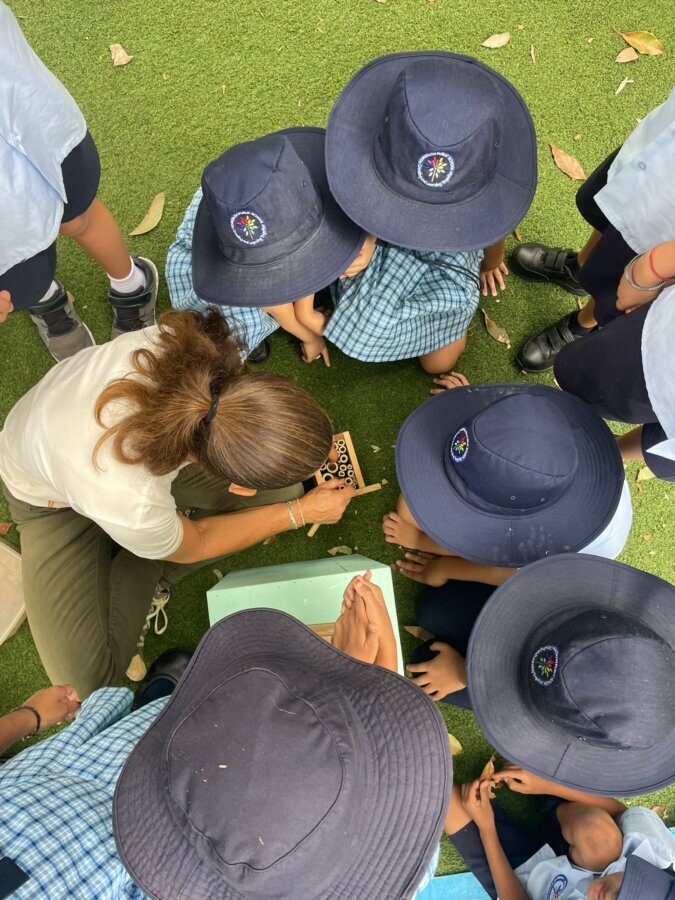
Outdoor: Making Blue-banded bee homes and placing them in the garden. Students problem solve how to best support pollinator needs in the school
All sessions can be adapted for wet weather conditions.
Connection to Country
B&B Belongings
Our unique program’s learnings, resources and activities have been developed in consultation with First Nations’ experts in the fields of biodiversity, flora and fauna, science, local histories and stories. Participation in this Program provides funding for local Aboriginal community expertise and/or an Aboriginal organisation to support ongoing First Nations’ connections, learnings and resources.
The B&B Belongings program connects students and the school to Country through planting bush tucker and native plants; documenting seasonal observations; building relationships with local Aboriginal communities; embedding the learning and sharing of knowledge with families through ongoing collaboration and integration of the resources.
For Educators: B&B Belongings
Themes:
Importance of Country and Place. Connection to Land. Diversity of Aboriginal people, knowledge and practices. Aboriginal culture and custodianship. Native species and environments. Seasonality.
Curriculum links:
CCP: Aboriginal and Torres Strait Islander Histories and Cultures
Science, Humanities and Social Science
Outcomes:
Students deepen their knowledge of and respect for their local environment through learning, hands-on experiences and developing connections with their local Aboriginal communities.
Session 1: Country
Indoor: What is Country? Biodiversity, pollinators, plants, habitats
Outdoor: B’eing on Country observations and planting native plants and edibles
Session 2: Culture
Local Aboriginal Educator/Elder led
Indoor: Custodianship, Seasons, Songlines, Stories
Outdoor: Mapping, species research and creative representation of knowledge, observations and feelings of connection.
Session 3: Community
Indoor: Ways of sharing knowledge
Outdoor/indoor activity: Discussion, ideating and collating information and observations for *collaborative book and contributions to the *seasonal calendar
*The B&B Collective is a collaborative resource produced by PlantingSeeds which is for ongoing use by the students and staff incorporating contributions from the school community and beyond as well.
Urban Cooling
B'Cool
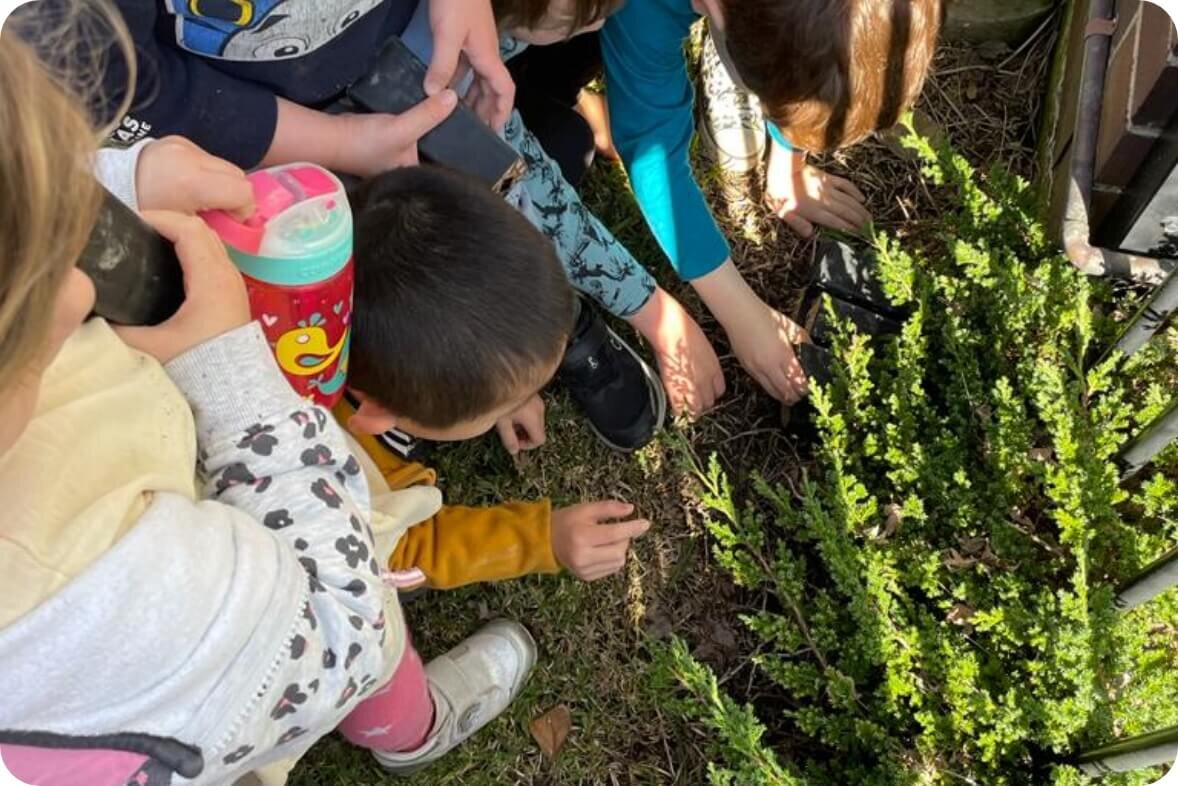
This practical and educational incursion extends and enhances PlantingSeeds’ multi-school B&B Highway program through a focus on the Urban Heat Island Effect, intensified by climate change. Students learn about urban heat’s impacts on environmental and community health, take heat measurements in school grounds comparing natural and synthetic surfaces, and develop strategies to counter heat with ‘green infrastructure’ and other measures. Problem solving actions include planting a biodiverse garden.
For Educators: B’Cool
Themes:
Urban Heat Island Effect. Biodiversity. Pollination. Native species. Living Systems.
Curriculum links:
Science, Maths, Science Understanding/Inquiry/Human Endeavour and Technologies. Civic and Citizenship. Problem Solving. Design thinking. Cross Curricular: Sustainability.
Outcomes:
Appreciate the importance of biodiversity and ‘green infrastructure’ for urban cooling. Recognise the role we all play in helping species living around us. Develop important skills for life such as planting. Learn how to use scientific tools for data collection. Analyse and interpret data to find solutions for cooling in the school and community. Feel empowered to advocate for the environment.
Session 1: B’ginner
Indoor: Learning about local biodiversity, plants and pollinators
Outdoor: Students undertake biodiversity assessments in their school grounds
Session 2: B’loomer
Indoor: Learning about local native plants, pollination and adaptation. Students learn about slopes and drainage and how plants can mitigate run-off and enhance soil nutrients.
Outdoor: Students plant a pollinator garden of local and endemic native plants in school grounds.
Session 3 - Bio B’lazer
Indoor: Learning about the Urban Heat Island Effect, exacerbated by climate change, and its implications to biodiversity loss and mental and physical health. This session is focused on local and more general scenarios. Concepts of blue, green and grey infrastructure are discussed and explained in relation to offsetting urban heat.
Outdoor: Students record, analyse, graph and map temperatures across built and natural areas in the school, discuss implications and solutions and develop ways of advocating and communicating their ideas to decision makers.
Food Systems
B&B Bites
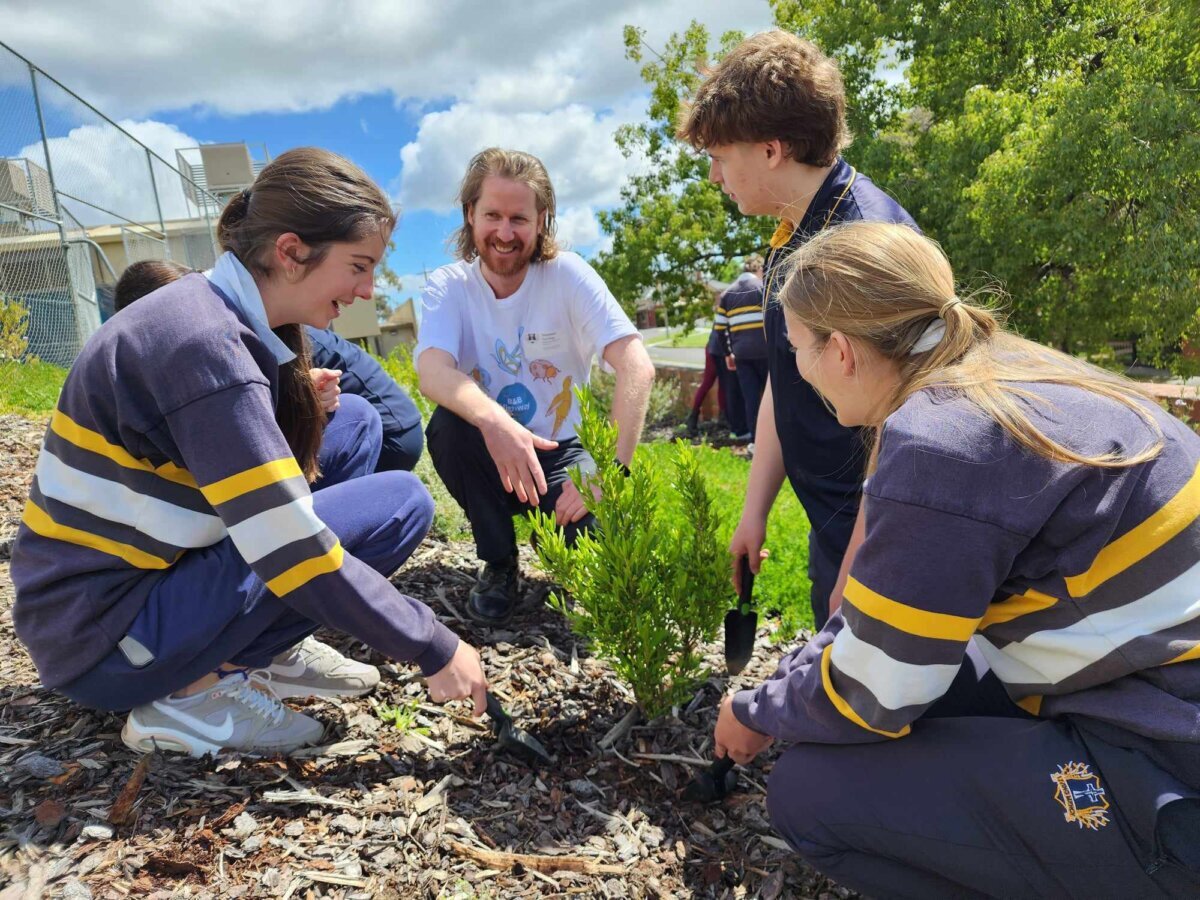
The B&B Bites program focuses on the links between biodiversity, pollinators and healthy food systems. Students will understand and have experience mapping optimal planting areas, observing food webs, assessing soil qualities and food webs and importantly, of developing ways of creating species-friendly gardens. This program provides both indoor educational learnings and outdoor hands-on experiences while facilitating numerous benefits for mental and physical health as well as encouraging teamwork and social skills.
For Educators: B&B Bites
Themes:
Insects and biodiversity. Lifecycles and anatomy. Environment and conservation. Aboriginal food sources. Native vs introduced species.
Curriculum links:
CCP Sustainability and Aboriginal Histories and Cultures. Humanities and Social Sciences. Maths. Civics and Citizenship. Science: Science Understanding (Biological Sciences, Earth and Space Sciences); Science as a Human Endeavor; Science Investigation.
Outcomes:
Students will develop knowledge and skills to understand the importance of soils, spaces and seasonality to our food sources; appreciate the need for biodiversity and supporting native species through planting native plants, including bush foods, and recognise the role they play in nature, gaining a deeper insight into food webs and the reasons to value and respect all living things.
Session 1: Collaboration - Biodiversity + foodwebs
Indoor: Learning session about plants, pollinators, relationships to food sources and seasonality
Outdoor: Students investigate and assess biodiversity and food webs in school or community grounds, map the garden and make seasonal observations
Session 2: Companionship Soil + Planting
Indoor: Learning about soil and how it influences the food we eat, understanding local native edible plants, pollination and adaptation
Outdoor: Plant native and non-native edibles, assess and analyse soil samples
Session 3: Conservation - Sharing the garden
Indoor: Learning about who we share our food gardens with - respecting all living things, including unwanted visitors as critical parts of the food webs that are so important to the health of the garden.
Outdoor: Creation of natural deterrents to keep the garden healthy without harm